¶ Introduction
This page will help you get to know the terminology of patterns frequently discussed in Etterna. Not sure what's the name of a certain pattern? This page will cover them. This list is also available to view in the client.
Note: There are a few more pattern types not covered in this list that may be added in the future.
¶ Rolls
Roll is the common name given to this type of pattern which requires you to press all columns in succession before repeating any columns again. It comes in several forms.
¶ Rolls (1234)
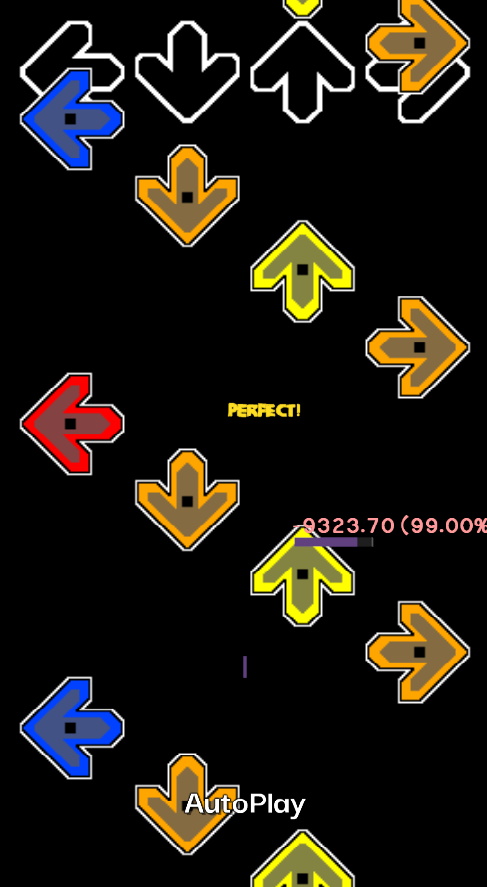
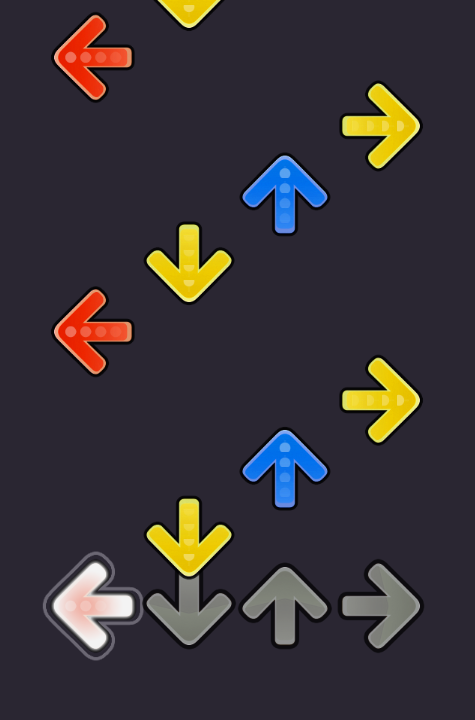
The specific roll depicted here may be referred to as an ascending roll. If it went in the opposite direction (4321) it would be descending.
¶ Roll (1243)
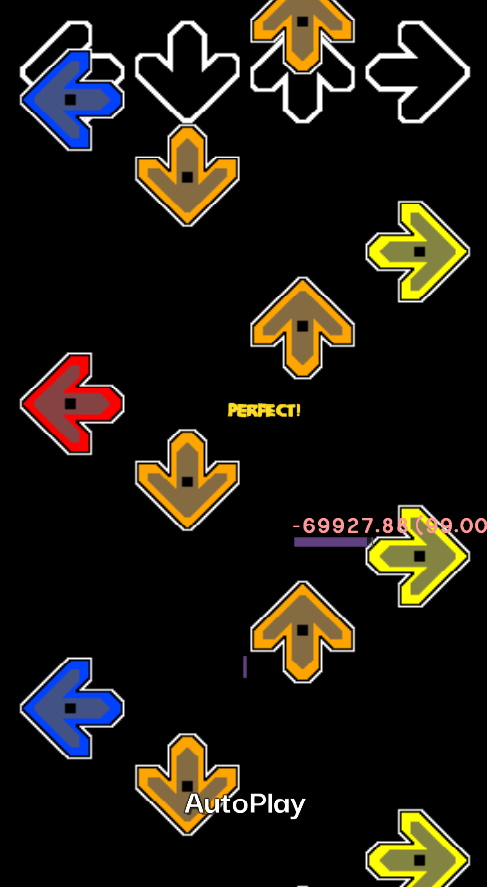
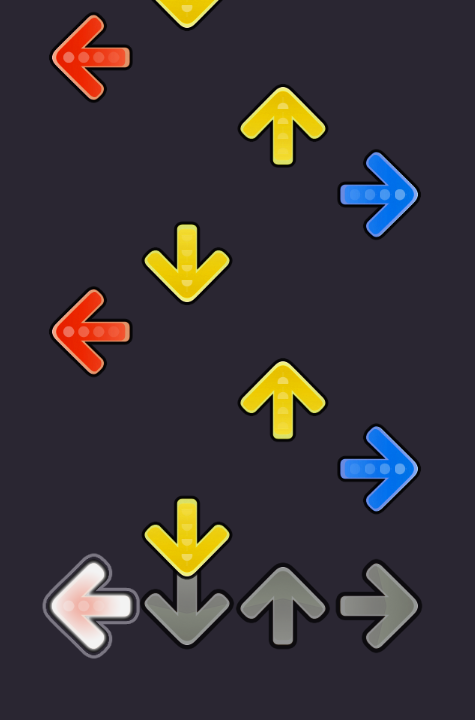
The specific roll depicted here may be referred to as a split roll. If the pattern began with the opposite hand (4312) it would be functionally equivalent.
Regardless, this roll variant can be effectively jumptrilled if its speed is sufficient.
¶ Roll (4132)
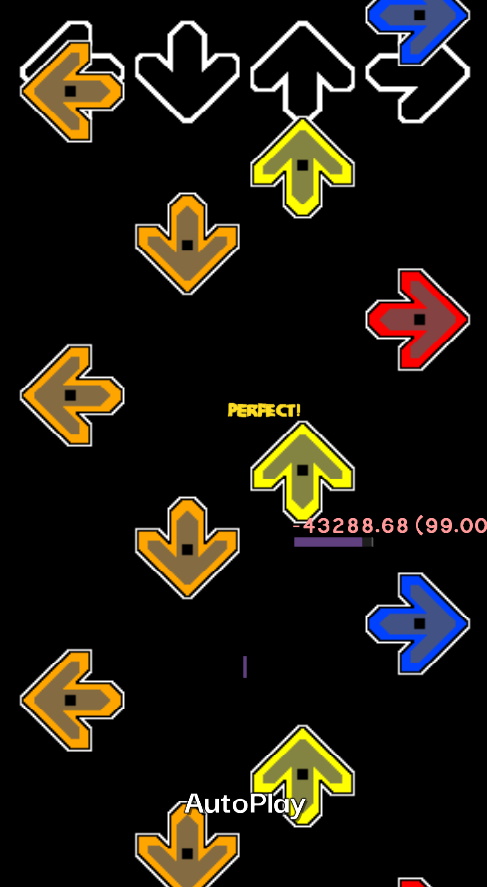
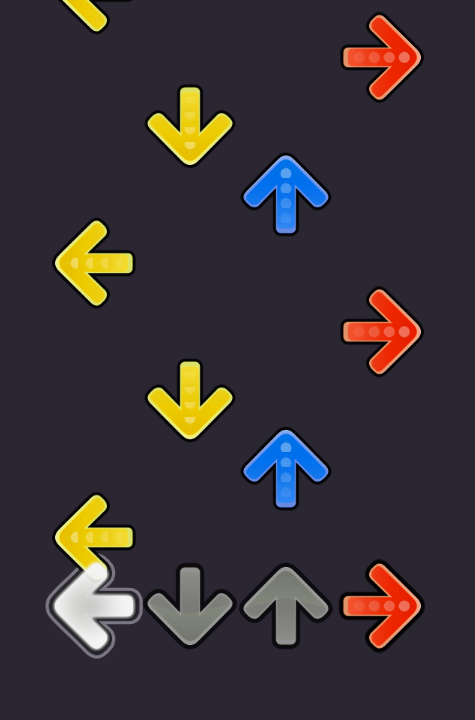
The specific roll depicted here may be referred to as a split roll, split hand roll, or split trill. It may also begin in reverse order (3241, inside out) but still remains functionally equivalent.
¶ Gluts
Gluts is a broad term which captures jumpgluts and handgluts. It's frequently debated what defines a glut or even if a handglut exists.
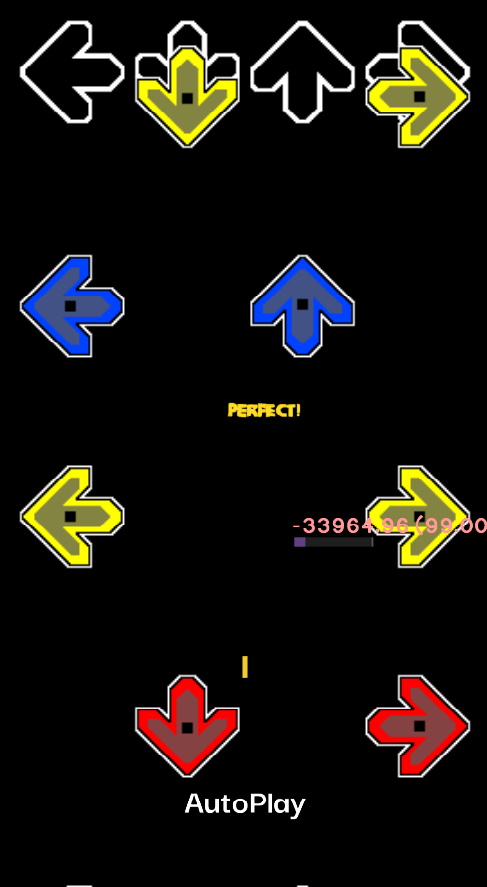
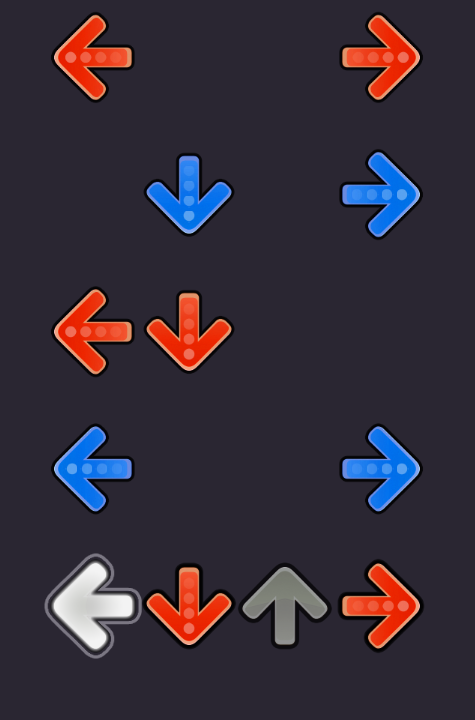
The most accepted definition of a glut is literal: jumpgluts are many continuous jumps (jumpjacks) which typically form minijacks as they change column pairs over the course of the glut run. Depicted in the image is a run of jumpjacks referred to as gluts because of the minijacks on column 1 and 4.
Gluts are a subset of chordjacks with more focus on jack speed than chords.
¶ Chordjack
Chordjack is the blanket term for patterns made up entirely of n-chords which form jacks.
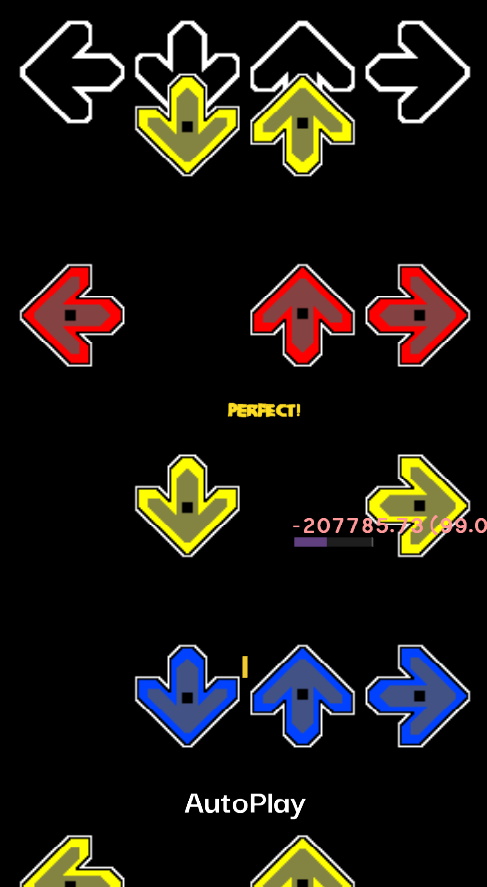
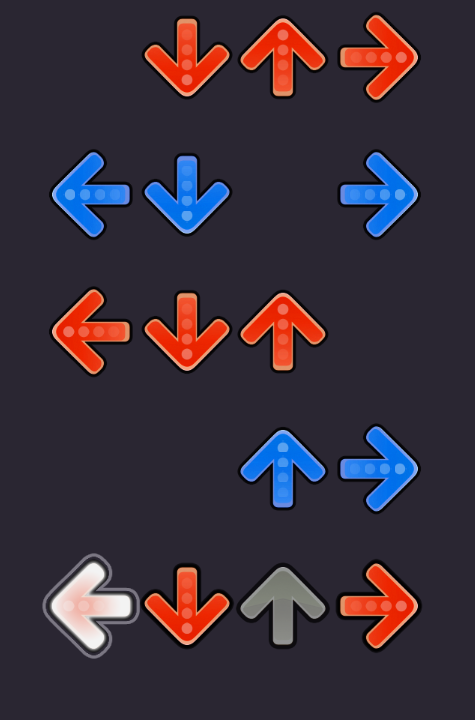
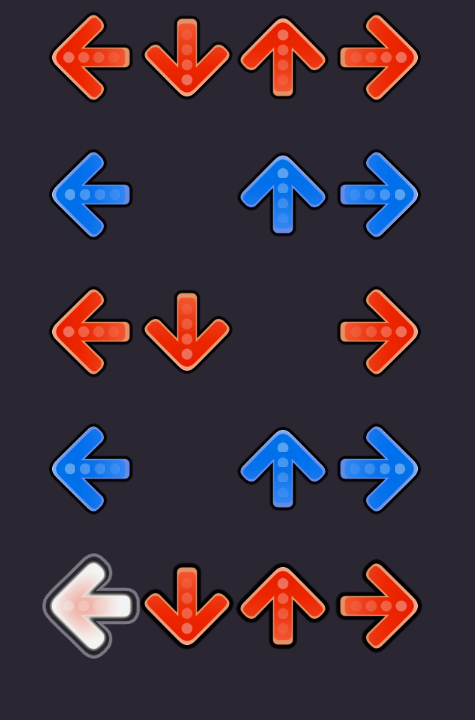
The chords contained in the overall pattern do not have to be the same. Jumps, hands, or quads are valid. Depicted below is a very generic medium density chordjack pattern containing only jumps and hands.
¶ Dense Chordjack
Dense chordjacks are a specialization of chordjacks which are biased toward hands and quads. At high enough density, this may be referred to as holedodge because when reading, there are more notes than empty spaces.
Dense chordjacks require a lot of stamina and tend to have embedded longjacks due to the pattern being almost entirely hands and quads.
¶ Stream
Just like the name implies, a stream is a continuous stream of notes. More specifically, these continuous notes are mostly on separate columns, not forming jacks. There can be any kind of variation to the patterning as long as it doesn't deviate too much from the pure definition.
Minijacks, chords, or other patterns that can be embedded may be found within a stream, but only serve to make it more difficult unless they dominate the overall pattern.
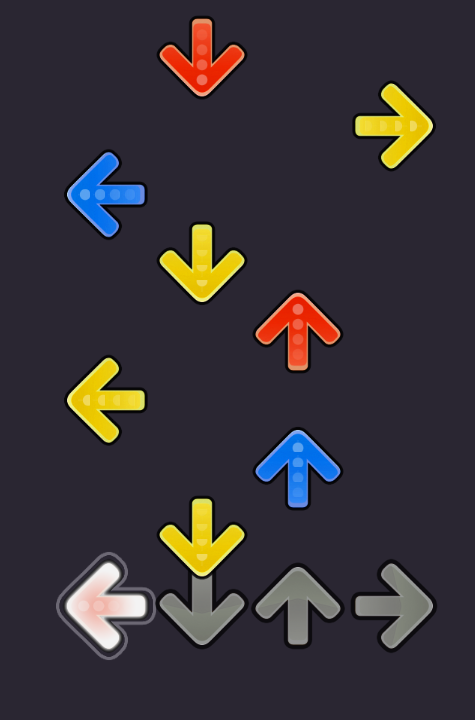
Below is a stream which is slightly rolly.
¶ Jumpstream
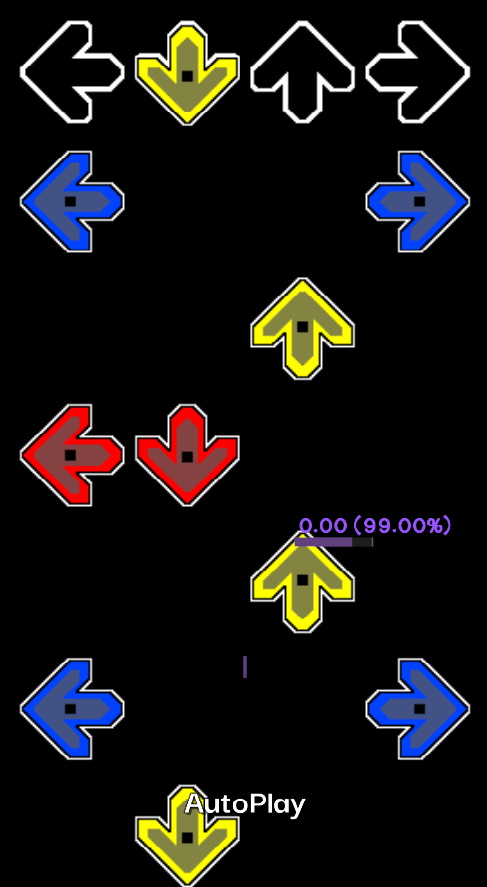
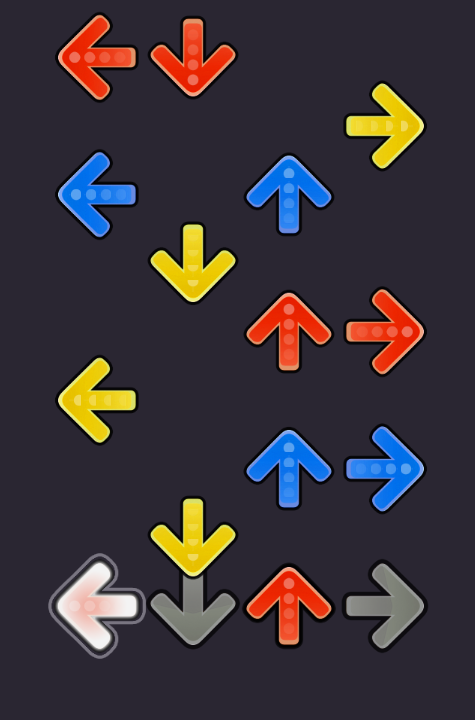
Jumpstream expands the definition of a stream by requiring jumps at a certain frequency within the pattern. Other than that, it is still a stream.
Depicted below is a simple jumpstream pattern with an anchor on column 1. A more observant player may also recognize that this pattern in isolation can be jumptrilled.
¶ Handstream
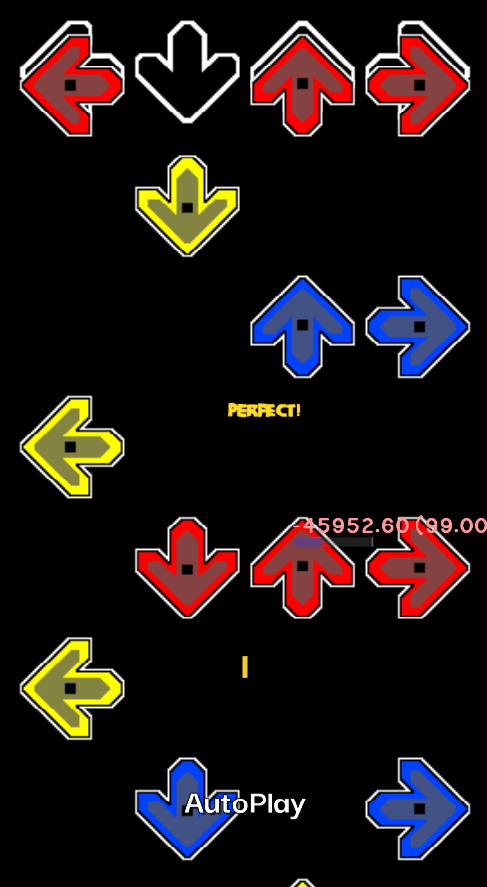
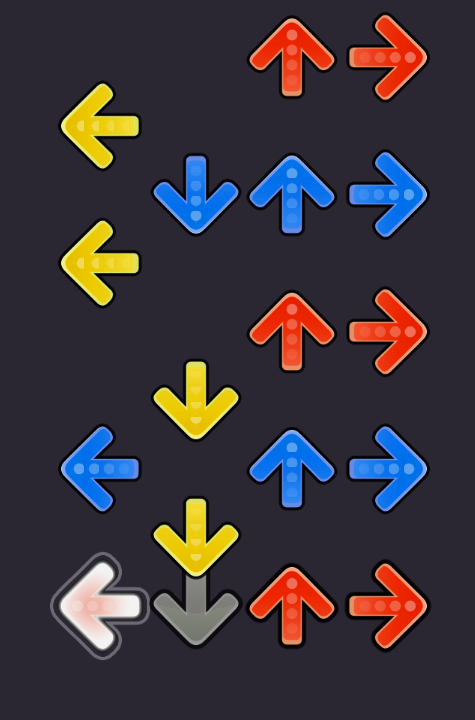
Handstream expands the definition of a stream by requiring hands at a certain frequency within the pattern. It is also not uncommon to find jumps embedded within a handstream. This may be referred to as dense handstream, although the most dense handstream is purely hands and single taps.
Anchors are more common in a handstream since the charter only has 4 ways to fit a hand into 4 columns. In the depiction below, there is an anchor on column 4 and, depending who you ask, also column 3.
¶ Quadstream
Quadstream takes the definition of stream so far that it begins to look like chordjacks.
It forms a minijack with a quad using a single tap (usually) and still flows like a stream as opposed to pure chordjacks.
Increasing the density of quads will lose this characteristic due to the limited column space.
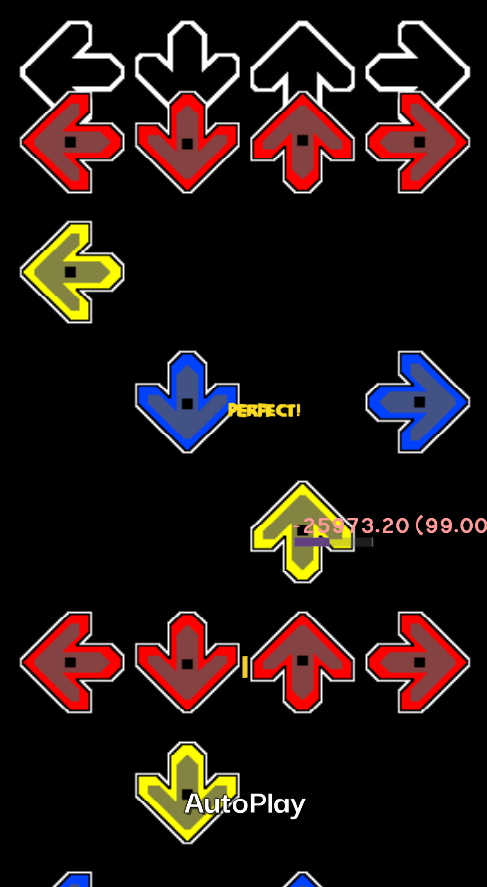
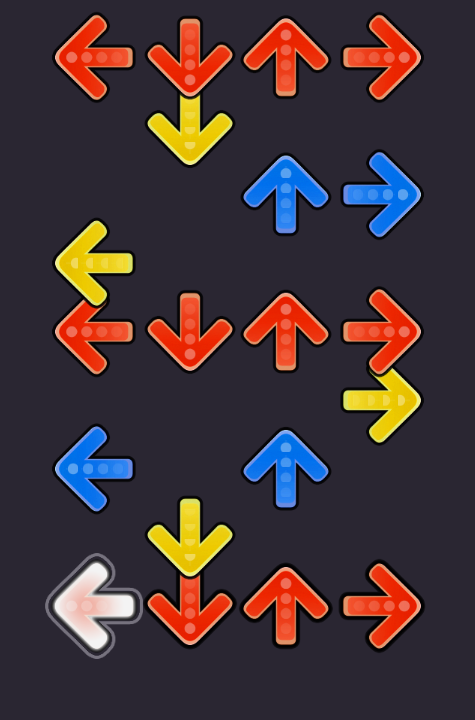
¶ Trill
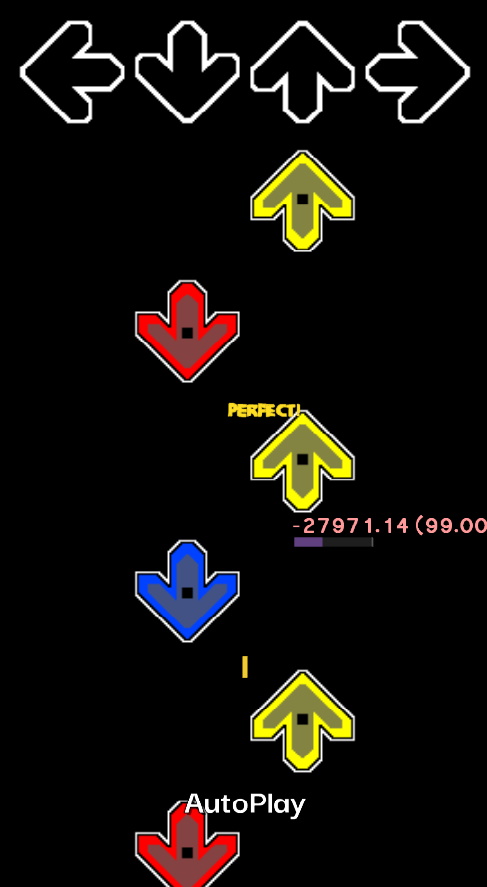
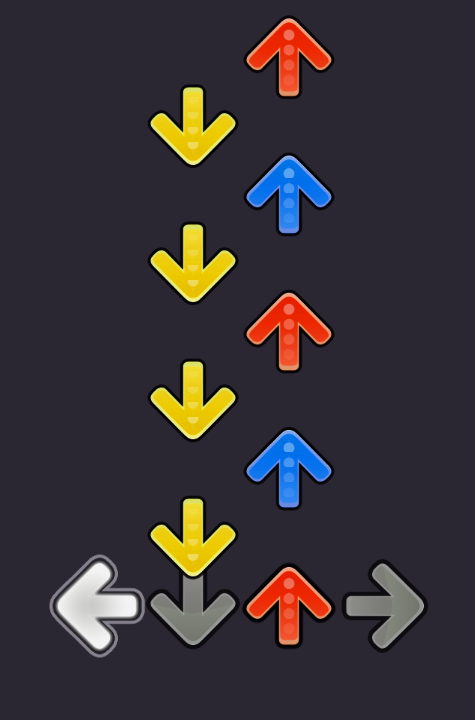
A trill is a sequence of two continuously alternating notes. In the context of this game, they can be either on one hand or split between both hands.
When a trill is one handed, it is called a one hand trill. Otherwise, it is a two hand trill. Trills are not restricted to two adjacent columns, and can be on columns 1 and 3 for example.
Depicted below is a simple two hand trill.
¶ Jumptrill
Jumptrill is a very simple expansion of a two hand trill. Jump on one hand and then jump on the other. Most often this pattern makes up the highest NPS section of a chart unless it is dense chordjacks.
One special thing about the ordinary jumptrill is that many other patterns can be broken down into a jumptrill, which allows cheese-oriented gameplay. It's not recommend doing this too frequently for the sake of your scores and habit forming.
¶ Split Jumptrill
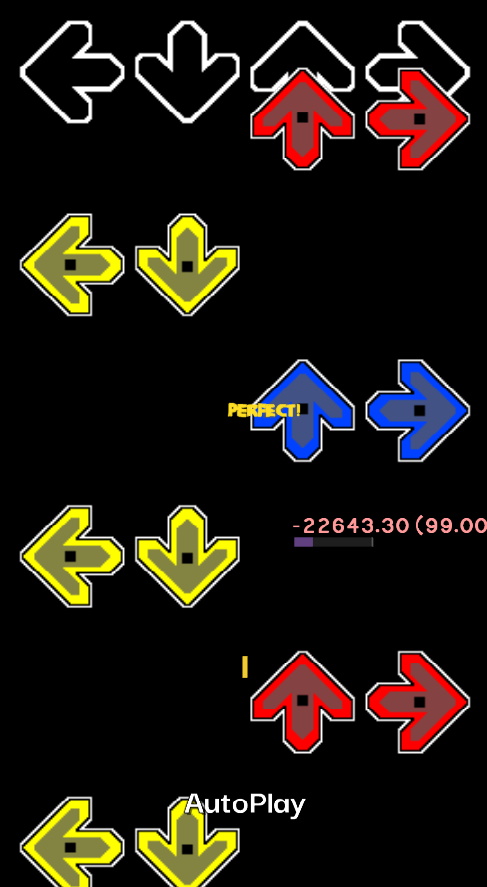
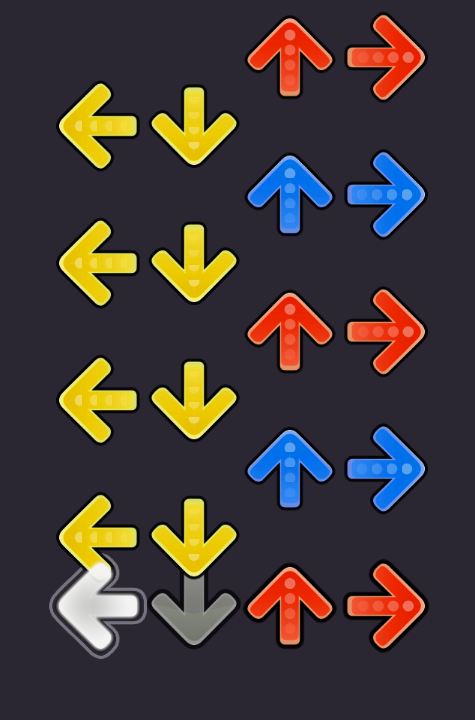
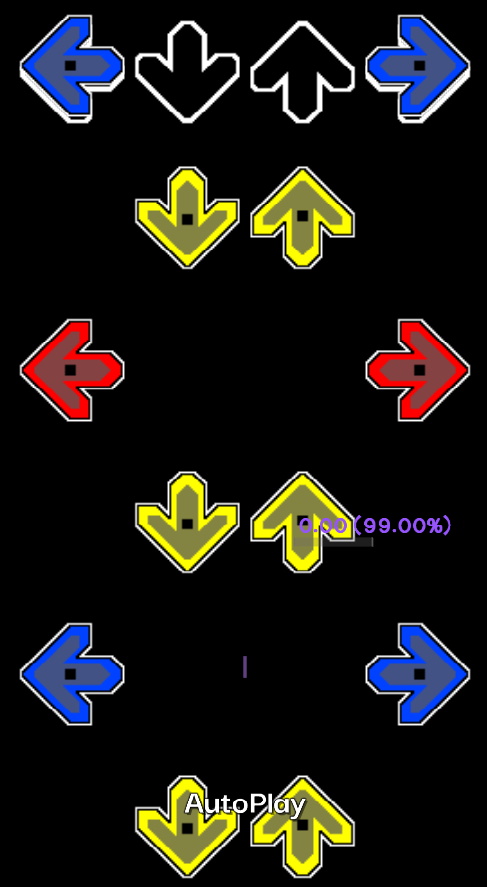
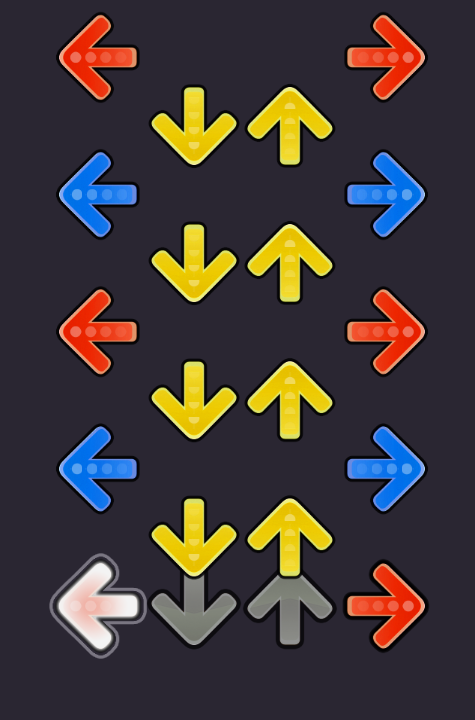
Split jumptrill is a shuffled jumptrill. It forms two one hand trills instead of one pure jumptrill. Split jumptrills are very annoying due to many players' inability to hit them fluently.
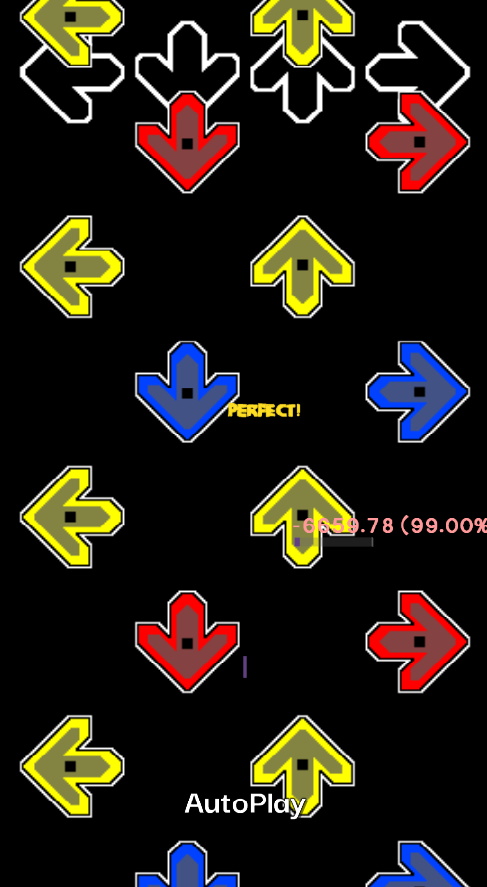
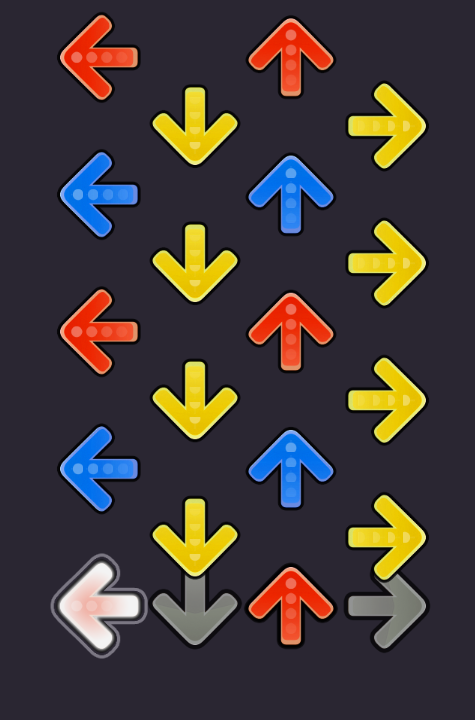
This specific variant of split jumptrills can be more difficult than the other variant of split jumptrills because a player tends to be more inclined to jumptrill or roll when simultaneously doing a same-direction rolling motion with both hands. Luckily they can be jumptrilled if hit just right.
Compared to the other variant of split jumptrills, this one is usually easier because it can feel more natural. They can be jumptrilled if hit just right.
¶ Jacks
A jack, or jackhammer, is a set of continuous taps in the same column. A longjack is the same thing, but a little longer than usual.
The length of a jack that is considered a longjack is debated, but generally it is around 5-6 notes. The longjack can continue into infinity.
Longjacks are the base pattern which make up continuous jumpjacks, handjacks, or quadjacks. This base pattern also makes up much of the structure for files oriented towards the vibro playstyle.
¶ Minijacks
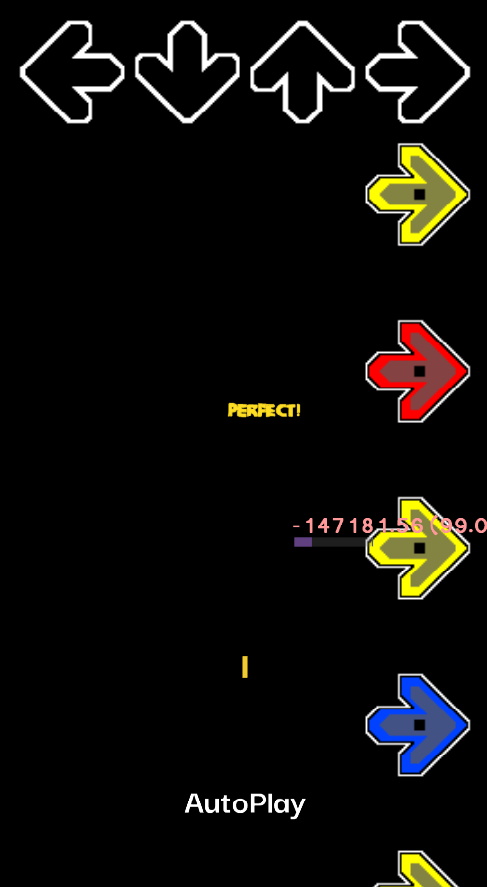
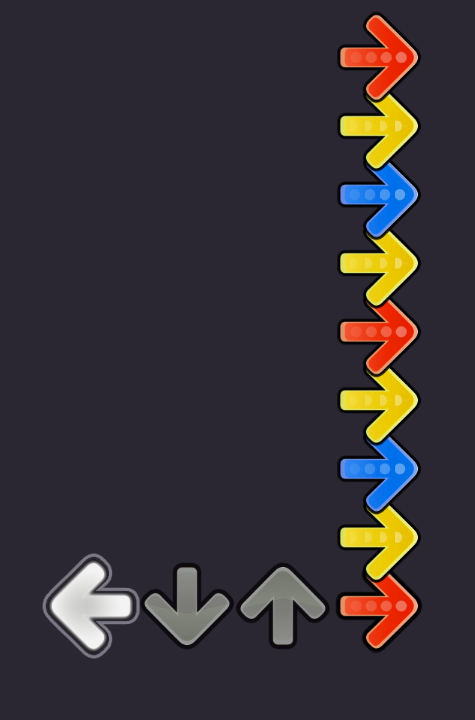
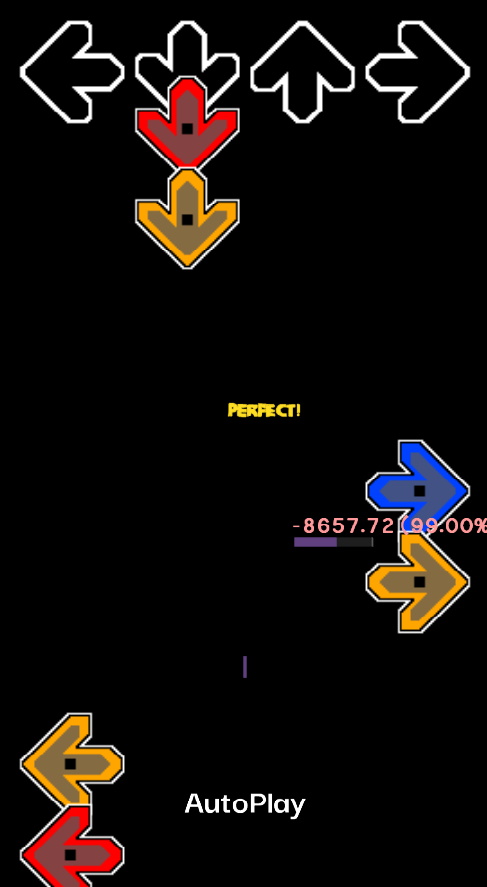
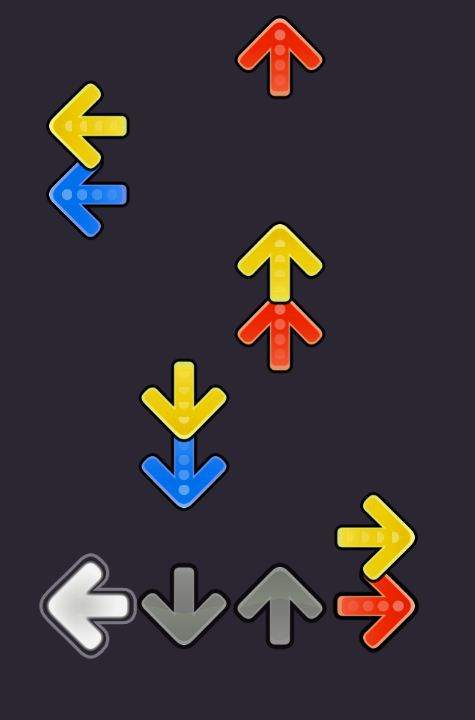
Minijacks are pairs of jacks. They can be continuous like the image below or embedded in some other pattern like a stream.
Minijacks can be difficult to hit accurately as they get closer together because of the nature of the hit window. Imagine hitting one note within 180ms. Now hit two notes in that same window. If the minijack is fast enough or the player is slow enough, it's guaranteed points lost.
Minijacks can be embedded within broader jack oriented patterns as a jack burst. Most commonly they are in isolation or in stream transitions that jack instead of trill.
¶ Anchors
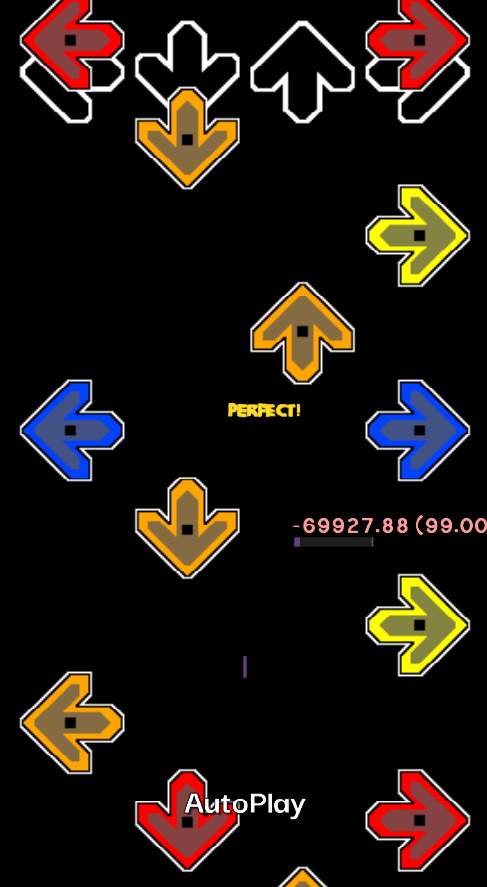
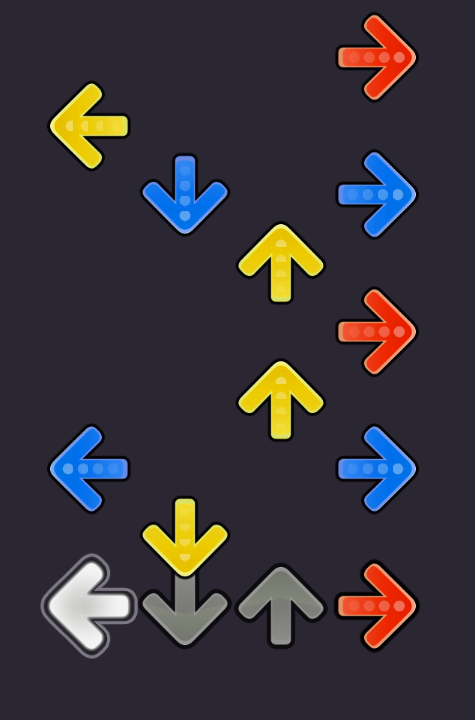
An anchor is a common continuous set of columns being utilized relative to the other columns contained in a pattern. Most commonly, anchors are only one column at a time
An anchor may be on a snap alternating from the rest of the pattern or not, or a bit of both. Anchors that last a while break down to be longjacks, which will cause an overall pattern to be more stamina draining.
The image below depicts an anchor on column 4.
¶ Minedodge
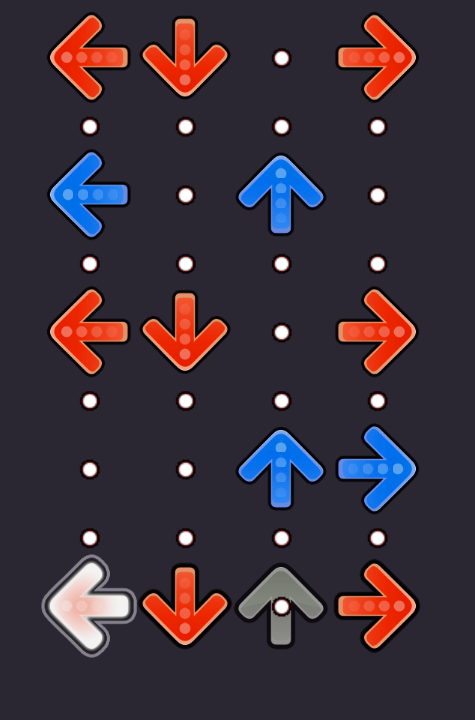
Minedodge is the term for a type of chart or general pattern which contains notes that are intentionally placed near mines to increase difficulty.
The difficulty of minedodge comes from the necessity of more precisely timing the press and release of notes and increased difficulty to read the notes depending on the noteskin used.
Minedodge does not actually change the MSD of a chart, because the calculator measures physical difficulty of the taps.
¶ Hold
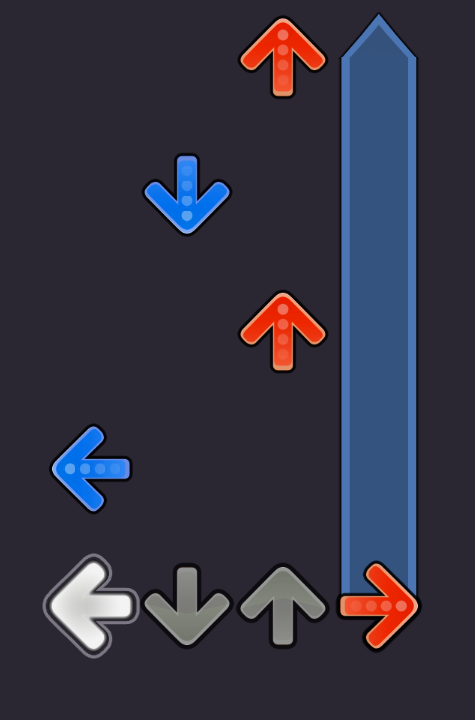
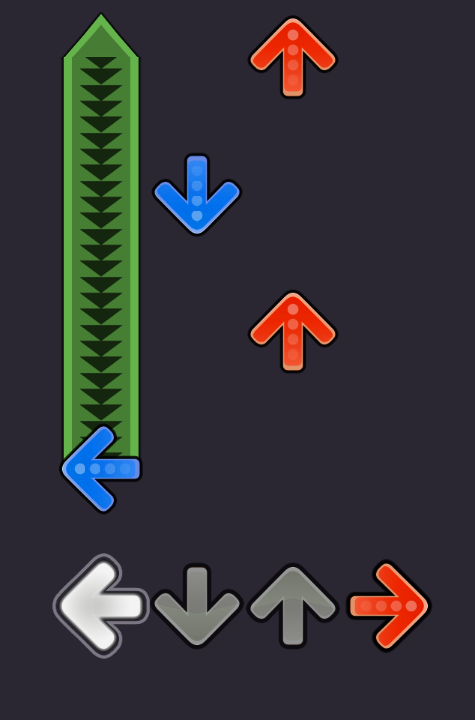
Holds are a note type which require the player to hold the button for the entire duration of the note. They may also be referred to as freezes or long notes.
Patterns made up of more holds are sometimes referred to as a holdstream or, at the extreme end of the spectrum, full inverse (all empty space is a hold).
In this game, a hold can be released for a short period of time dependent on the judge difficulty. On judge 4, the time is 250ms. Holds can then be regrabbed. Holds do not have release timing, but release timing can be emulated with a lift or mine.
¶ Roll (Note Type)
Roll note types, not to be confused with the roll pattern, are a hold type which require the player to continuously tap the button for the duration of the note. They may also be referred to as a rolld.
Rolls cannot be held and must be continuously tapped. The speed of the tap has a threshold the player receives no judgment for, but it gets smaller at higher judge difficulties. On judge 4, the player has up to 500ms between taps.
¶ Burst
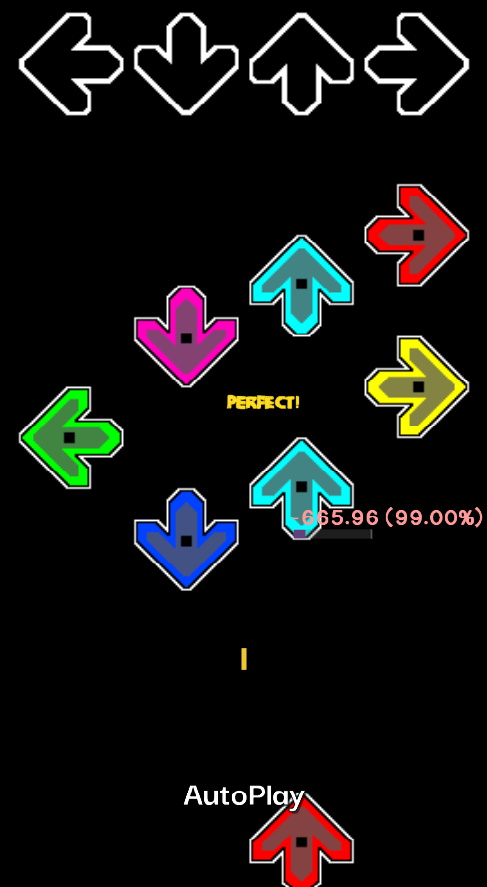
A burst is a pattern specialization which means exactly what it says. Relative to its pattern context, a burst is much quicker.
Bursts can come in any form which matches that definition, not only the scenario depicted below. Jacks and jumpstream can also burst. The point is that it is a quicker collection of notes, almost like a compressed pattern.
Often, a burst is patterned in such a way that it isn't difficult to full combo. But that isn't always the case!
¶ Polyrhythm
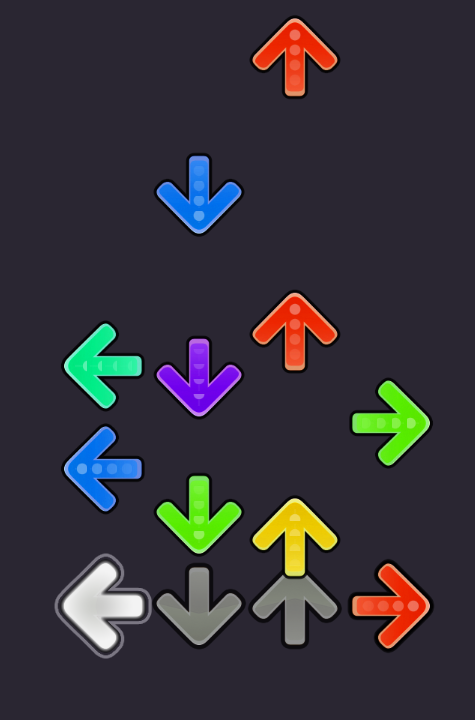
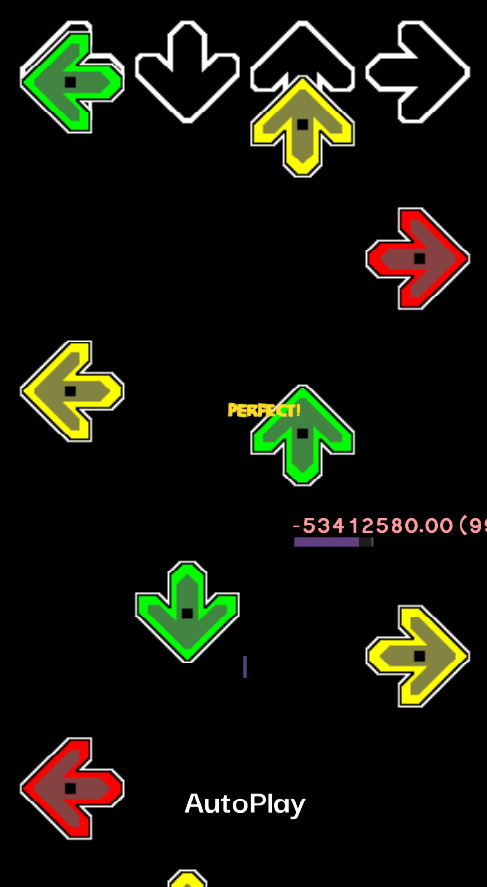
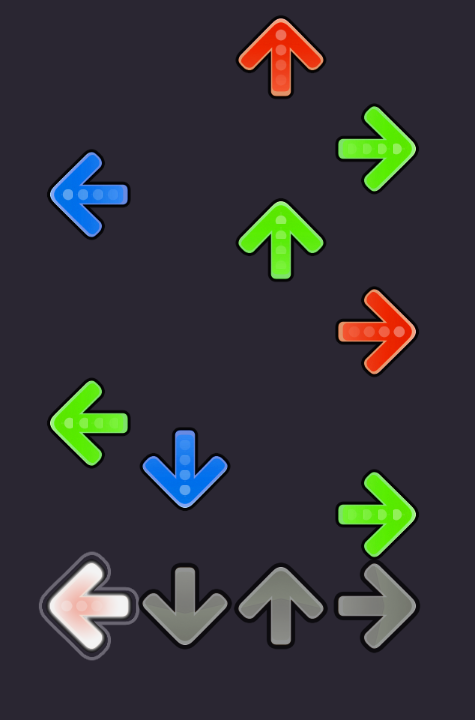
Polyrhythms are a pattern specialization which indicates that multiple rhythms are being charted simultaneously, leading to alternating snaps being utilized. Sometimes the result of this is a very awkward, technically difficult to execute pattern.
Below is a depiction of a simpler polyrhythm of 16ths and 12ths.
¶ Graces / Flams
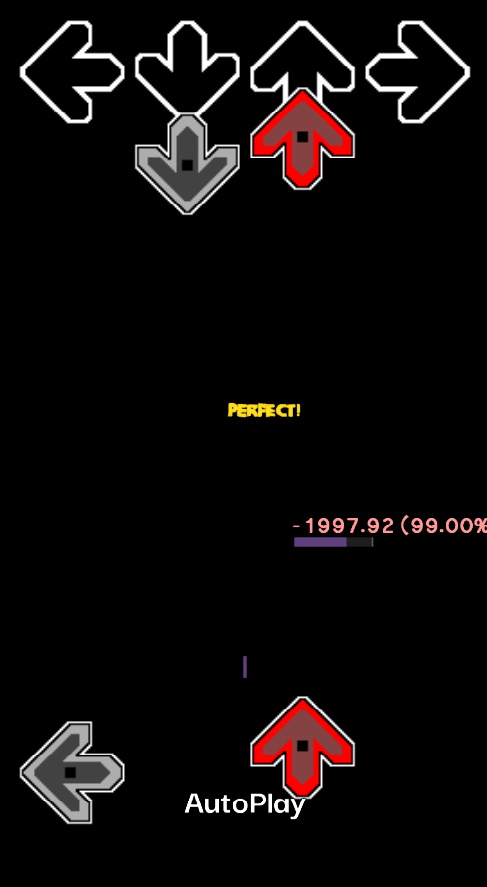
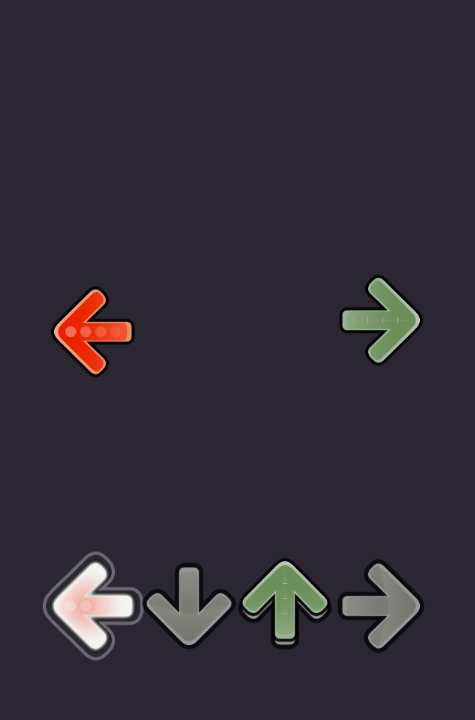
Grace notes are slightly offset notes, exceptionally rarely forming minijacks, which represent a kind of grace or extra flare to an initial note
In musical theory, these are defined as not so necessary, but typically when these are charted it means that a grace note was present in the music.
Flams are made up of graces. Within this game, both usually mean the same. Graces usually break down to be a single chord, and can rarely contain chords themselves.
¶ Runningmen
Classically, runningman is a term referring to a stream that is anchored. We expand on that definition by allowing chords to be mixed in very lightly. An anchored jumpstream can technically contain a runningman, but is more likely to just be referred to as anchored jumpstream.
It is required that the anchor in a runningman be offset from the rest of the pattern so that it doesn't form chords with the rest of the pattern.
Below is a runningman anchored on column 1. The off-taps may be on any column, but it is important that not too many taps be on the same hand as the anchor.